|
Aerospace Systems and Training LLC |
|
|
|
|
|
|
|
|
|
|
|
|
|
|
|
|
|
|
|
|
|
|
|
|
|
|
|
|
|
|
|
|
|
|
|
|


|
MARS MISSION and GPS NAVIGATION
VIII.
Propulsion Systems to Mars IX.
Terraforming Mars X.
Martian Chemistry XI. The 10th Planet Prometheus |
|
I. Scientific/Technical/Management
Section The new US mission to a
nearby asteroid to extract a boulder from it and return it to a lunar
orbit Asteroid Redirect Mission ARM-UP is the first steppingstone to Mars and will
be completed prior to the Mars manned mission. Launching to Mars will most likely take
place from Lunar orbit using using Lunar gravity to propel the
spaceship.
With Mars being some 34 million miles at its closest it would be a
demanding physical experience for the selected astronauts. I think that the mission would require at
least 5 spaceships rather than 1 because of the complexity of the
mission. As you remember Columbus
would not leave Spain with less than 3 ships, 1.) The ship designed for the
crew. 2.) A repair ship with spare parts.
3.) Fuel-tanker ship for the Mars lander. 4.) The Mars lander ship
with its own cargo bay including the stores: the dwelling material for 500
days, food, water, oxygen generators, Mars rover, and ground radar. 5.) A GPS
control ship with required satellites and controlling equipment. Since it would take 2+ Earth years and 500
Mars days to travel back and forth to Earth it would truly be a test of
endurance on the part of the crew but in comparison to other historical
explorers who were gone for similar periods it would not be a much longer
time record, example Magellan 3 years to circumnavigate the Earth and Lewis
and Clark 2 years and 4 months. The
return to Earth mission would be longer because Mars’s orbit would change
while the 500 day exploration took place so the return trip would be over 34
million miles, so 500 days after Perigee, unless they decide to wait a full
Martian year about 1.9 Earth years for another 34 million mile return. The ships names respectively should be the
Enterprise, Atlantis, Endeavor, Columbia and Challenger.
The mission to Mars in the near future would be a historical milestone
in technology perfection. The Perigee period is a
very import timing on the arrival to the planet, in the Martian calendar https://www.aerospacesandt.com/Mars%20new.html
this is the shortest distance to Mars. Separate calendars for other planets are
important since they all have
orbital differences and would be much different than that of Earth, as an
example orphan planets with no Suns would require special calculations. Some of the Universes
orphan planets may be the result of black holes devouring their Sun or being
dislodged from orbit by a planetary imbalance of another planet. These planets would drift through the
Universe until gravity from another Sun would take them into new orbits.
To bring the mission specialist, building
material and land rovers to the surface NASA would want a cargo vessel that
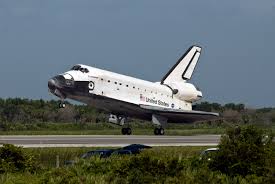
has the capability to descend from orbit and instead of glide like the
Shuttles to the surface of the planet, the vehicle would be designed to have
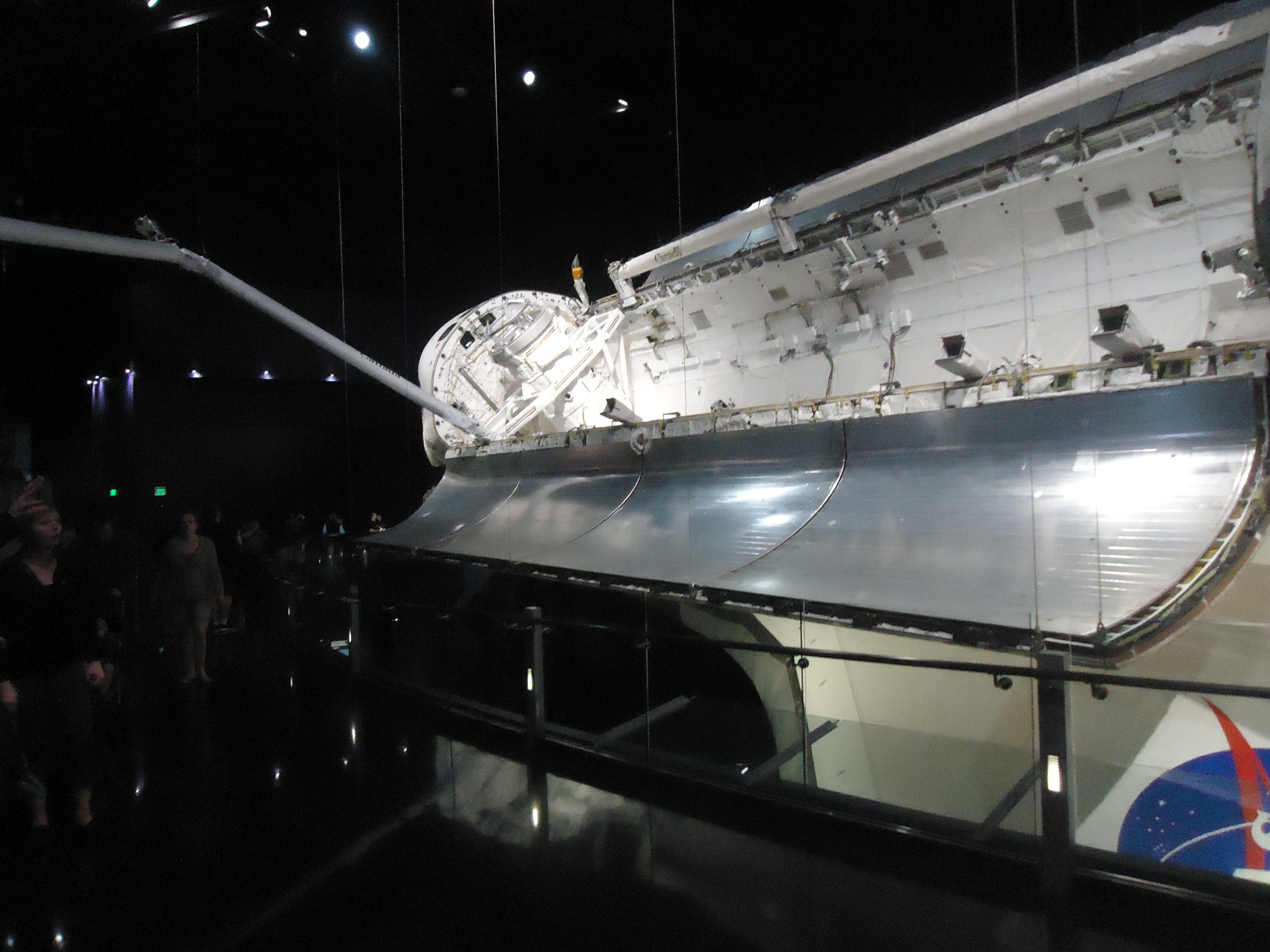
a cargo bay similar to the Shuttle with the working arm to lift the heavy
equipment down, and land with vertical landing and takeoff capabilities. The merger of two present day technologies
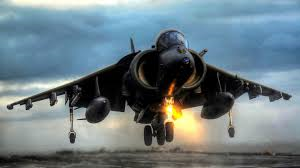
would work. As an example, the Space
Shuttle Cargo Bay system and the Harrier with its vertical takeoff Pegasus
engines.
Th e
Takeoff from Mars back to fleet orbit
would require an escape velocity Ve (km/s) of 5 compared to Earth’s Ve (km/s) of 11.2, so a thrusting
rocket system would need 44.6% less than on Earth. The ship would need to take off vertically
and then accelerate like an aircraft, pitch up to an angle of attack that
would allow orbit but prevent stall and then accelerate to its escape
velocity thrust. The speed of sound
on Mars would also be a major factor to consider since it considerably
different than Earth’s and would affect Mach speed, wing buffeting with
stalls and spins. The radio
transmissions to Earth would have need adjustment on the wave
modulation. The fuel requirements to launch
for the planet Mars would be based on the height of the Exosphere where the
ship would encounter the least drag from atmospheric molecules. The
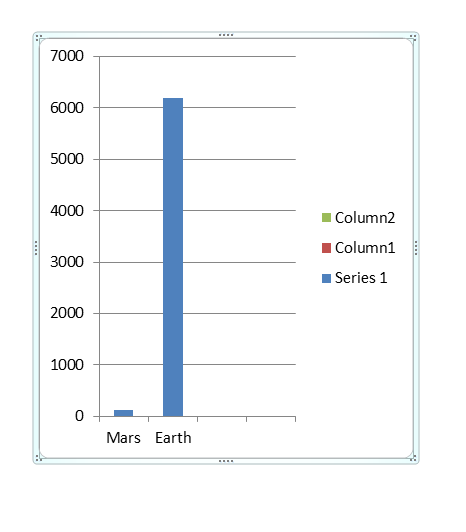
comparison below compares Earth’s Exosphere at 6,200 miles and that of Mars
at 120 miles, so the fuel
would be some 51.5 x less than that required on Earth for the same ship’s
escape velocity.
GRAVITY
100 pounds on Earth would weigh in at 38 pounds on Mars. The Space Shuttle empty on Earth empty
weighs in at 165,000 pounds if we landed a similar size craft on Mars it
would weigh in at 62,700 pounds. Atmospheric
pressure terminal velocity equation below would be modified by the factor of
38%.
SURVIVAL
Long term colony requirements could supply electricity with solar
cells and wind, even though wind is not developed with the same high and low
pressure of the Earth the planet still has Coriolis wind factors and
occasional sand storms which would hamper the solar panels ability to collect
electricity for the oxygen generators and lighting. Back up battery collectors for several days
of sandstorm would be vital to survival.
Location of large concentration of water and its purification from
Martian microbial would be a major goal for long term colonization. The initial crew would need 500 days of
water for a crew of 3 astronauts at 3 gallons a day each, that would be 4,500
gallons x 8.34 = 37,530 pounds on Earth and 14,261.40 pounds on Mars plus the
weight of any bladder tanks.
Water on Mars may have been more prevalent during its volcanic periods
which heated up the atmosphere. The
average temperature on Earth is 57 degrees F. and on Mars -81 degrees F.
freezing any liquid, but there are indications that water flowed in the
Martian past. Extraction of water from
its polar region and locating water near its volcanos in sub terrain pools
may provide a source for future colonization.
One interesting observation Mars has very few meteorite impacts
compared to our Moon; the planet is much closer to a large asteroid field
than our moon. This may be that the
heavy dust storms of the planet have been covering up these events. It may be also that Jupiter’s gravity is a
shield to these events. Moving
around the Martian surface could be accomplished with the newer rover designs
which could be retrofitted with GPS equipment bringing in a new era
of navigation in space. Martian GPS satellites would send their
signals to modified dish antennae aboard their rovers. Due to Coriolis wind factors occasional
sandstorms could last several weeks and the solar panels would not generate
electricity for the oxygen generators and other options would be needed to
counter the effects of sandstorms which would be vital to survival long term colonization. The initial crew would need 500 days of
water for a crew of 3 astronauts at 3 gallons a day each, that would be 4,500
gallons x 8.34 = 37,530 pounds on Earth and 14,261.40 pounds on Mars plus the
weight of any bladder tanks. SURFACE NAVIGATION &
TRANSPORTATION Below are some of the surface vehicles designed and tested
for the trip they are designed to deploy the space suits for the Martian
surface without decompressing the vehicles.
They have suspensions that can take large variance in the terrain
slopping.
Another form of transportation to move
supplies and explore would be with radio controlled drones, because of
thinner atmosphere experiments of propeller equipment would be crucial, if
they work than on 2nd missions to Mars could include the Marine
Corps. Osprey with modified rocket propellant engines to compensate for the atmospheric pressure on the Martian surface
averages 600 pascals (0.087 psi; 6.0 mbar),
about 0.6% of Earth's mean sea level pressure of 101.3 kilopascals
(14.69 psi; 1.013 bar). The
prop operated drones would need to be modified to rockets and props since
props alone would not develop enough thrust.
The wings design for these flights have already been tested on Earth
as with the U2, X1, X3, XB-70, X-35, SR-71and F-15s to these very light
atmospheric conditions.
HUMAN BILOGY GRAVITY &
ATMOPSHERE Biology of humans after long term exposer
to Martian gravity may change with muscle and bone degradation. Females may have
menstruation issues and fertilization may require centrifugal equipment or
IVF. Infants may walk earlier, and
teething may take place later. Spinal
elongation may occur after several generations. The first Mars baby born weighing 9 pounds
on Earth would weigh in at 3.42 pounds on Mars thus would have less issues
standing provided his muscles would be able to exercise to Earth’s standard.
Space suits on Mars would require additional protection from tearing from
rocks during exploration, materials
like Kevlar could be woven into the outer layer of the suit. The pressure on
Mars's surface is a real issue since it is above the Armstrong pressure line
were body temperature would cause boiling of liquids. Water on Earth boils at
212 degrees F. at sea level on the surface of Mars it would boil at body
temperature without a Space Suit. The effects of hypoxia and hypothermia
would be instantaneous without a space suit.
II. Servicing Concept
with GPS Constellation Systems
Example
|










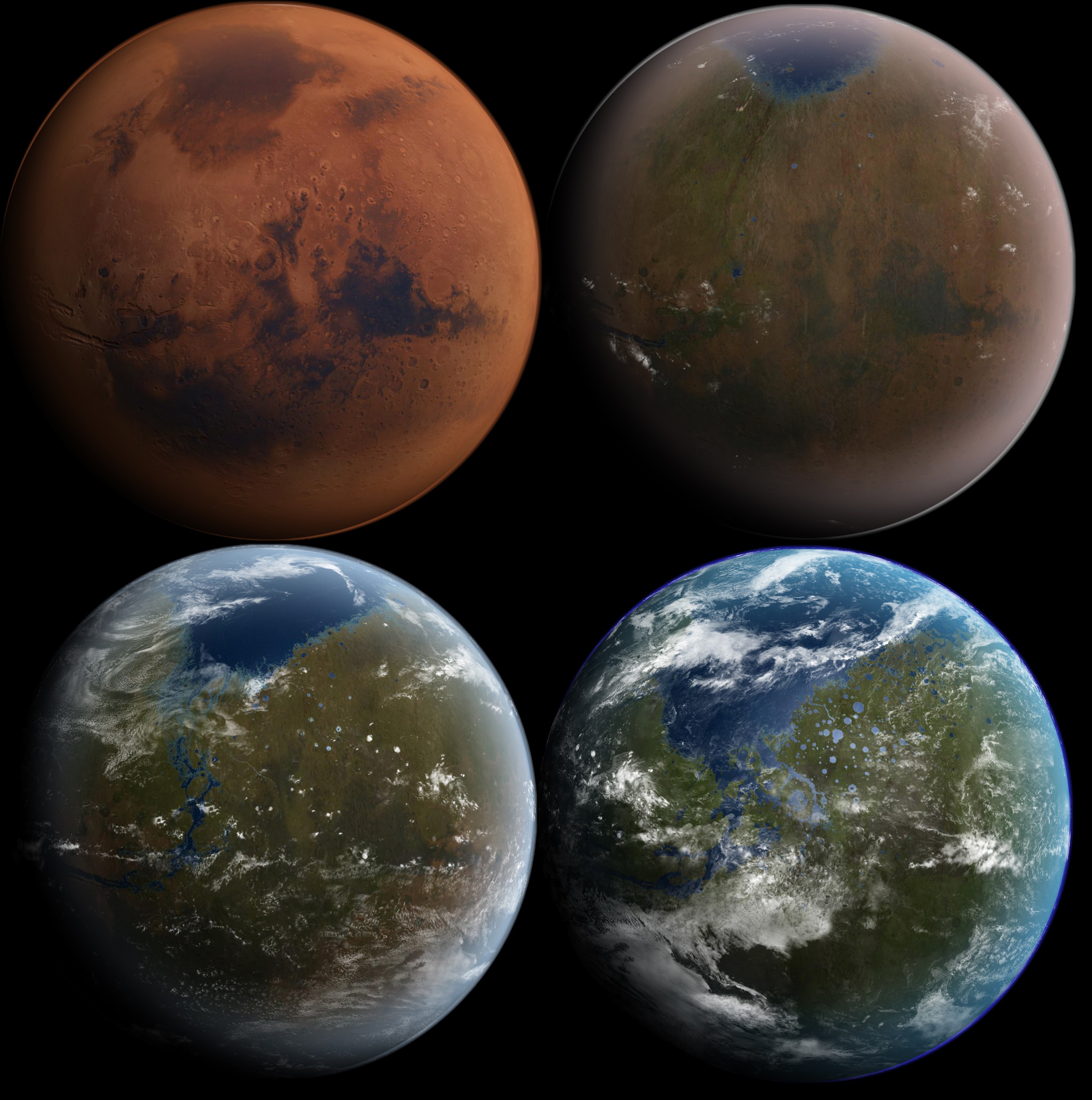 |
By Daein
Ballard - The original image was uploaded on en.wikipedia as
en:Image:MarsTransitionV.jpg,
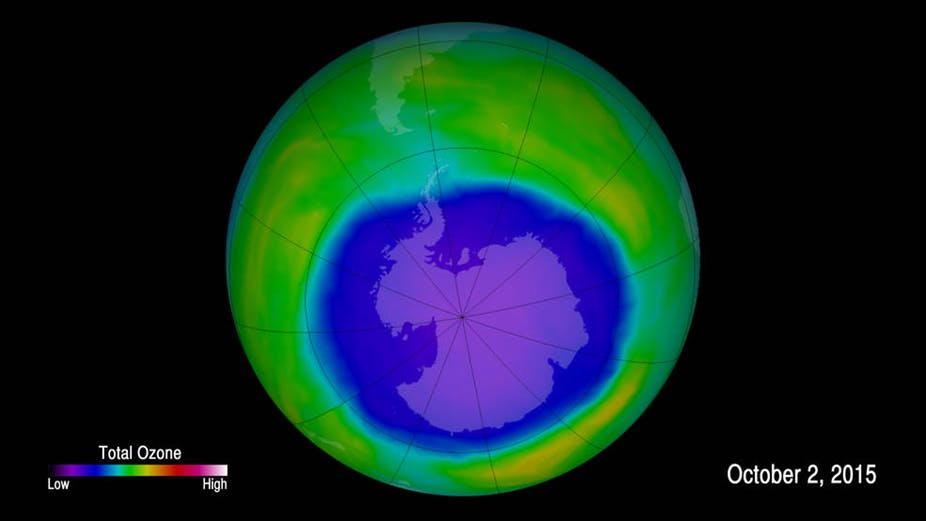
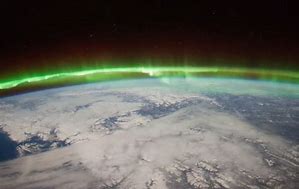
The Ozone layer is a important part of the atmosphere on a planet with
biological lifeforms it is composed of a triad gas with 3 oxygen molecules
fused together by radiation from the Sun it protects the planet(s) from cosmic
UV light which can disrupt life as we know it. Mars may have had a layer once long ago and
it may have burnt off from Olympus Mond’s, and meteorite damage where the planet
lost most of its surface water. The
gas has a light bluish color and is not good for breathing with humans but at
altitude is a beneficial planet roof.
One way that the ozone layer could be built on Mars would be with
large dirigibles using O3 generators attached. The O3 generators would be built into
a gondola on the bottom of the
dirigible. On Earth these experiments
could start with the repair of our damaged ozone layer caused by industry, meteorites,
and volcanoes. The governments would
have to determine how many tons of O3 would need to be replaced in the lower
stratosphere to restore the Ozone layer to its original state. This could use
data imagery from satellites to determine the size of the hole. Since the ozone layer on Earth starts at
around 80,000 feet higher altitude equipment would be required. If this works on Earth, then this method
could be used on Mars. Of course, the
area to be covered on Mars would have to engulf the whole planet and would
take centuries to complete. Helium
gases could be used to lift the platforms with the
ozonizer equipment.
The generators would be powered by solar panels and launched by the
poles from New Zealand, Australia and Thule, Greenland during the summer
periods where there are periods of 24 hours of sunlight. Although some of the damaged area of ozone
has returned it is still not at the levels it was once due to refrigerants
CFC, hair spray, NO, N2O, Br, CL and other pollutants. Some authorities mention damage at the
Ozone layer may cause melting ice caps, rising oceanic levels, disappearing
atolls, damaged coral reefs, Australian bush fires, warmer ocean temperatures
causing increase in hurricane and cyclone events, mutation of viruses and skin cancer.


X.
MARTIAN CHEMISTRY
Based on these data sources, scientists
think that the most abundant chemical elements in the Martian crust, besides
silicon and oxygen, are iron, magnesium,
aluminum,
calcium,
and potassium.
These elements are major components of the minerals comprising igneous rocks.
The elements titanium, chromium, manganese, sulfur, phosphorus, sodium, and chlorine are
less abundant but are still important components of many accessory minerals
in rocks and of secondary minerals (weathering products) in the dust and
soils (the regolith).
Hydrogen
is present as water (H2O) ice and in hydrated minerals. Carbon occurs as
carbon
dioxide (CO2) in the atmosphere and sometimes as dry ice at
the poles. An unknown amount of carbon is also stored in carbonates.
Molecular nitrogen
(N2) makes up 2.7 percent of the atmosphere. As far as we know, organic compounds are absent except for a trace
of methane
detected in the atmosphere. Below is the Atomic Weights of
elements and a comparison of the approximate weight on the Martian Planet as
many Earth elements will be used on Mars.
Lack of oxygen would affect atmospheric entry temperatures. Chemical reactions will differ as an
example the liquid Mercury Hg used in temperature and barometer gauges will
vary and the rate that the temperature scale adjust will occur sooner because
of atomic weight.
TABLE
|
|
|
|
|
|
|
|
|
|
|
|
|
|
|
|
|
|
|
|
|
|
|
|
|
|
|
|
|
|
|
|
m.jpg)
.jpg)
.jpg)
.jpg)
.jpg)
.jpg)
.jpg)

jpg.jpg)
.jpg)
.jpg)
.jpg)
.jpg)

.jpg)
.jpg)
.jpg)
.jpg)
.jpg)
.jpg)
.jpg)
METALS
|
|
|
|
|
|
|
|
|
|
|
|
|
|
|
|
|
|
|
|
|
|
|
|
|
|
|
|
|
|
|
|
|
|
|
|
m.jpg)
m.jpg)
m.jpg)
m.jpg)
m.jpg)
m.jpg)
m.jpg)
m.jpg)
m.jpg)
m.jpg)
m.jpg)
m.jpg)
m.jpg)
m.jpg)

m.jpg)
m.jpg)
m.jpg)
m.jpg)
m.jpg)
m.jpg)
m.jpg)
m.jpg)
m.jpg)
m.jpg)
TRANSITION METALS
|
|
|
|
|
|
|
|
|
|
|
|
|
|
|
|
|
|
|
|
|
|
|
|
|
|
|
|
|
|
|
|
|
|
|
|
TM.jpg)
TM.jpg)
TM.jpg)
TM.jpg)
TM.jpg)
TM.jpg)
TM.jpg)
TM.jpg)
TM.jpg)
TM.jpg)
TM.jpg)
TM.jpg)
TM.jpg)
TM.jpg)
TM.jpg)
TM.jpg)
TM.jpg)
TM.jpg)
TM.jpg)
TM.jpg)
TM.jpg)
TM.jpg)
TM.jpg)
TM.jpg)
TM.jpg)
TM.jpg)
TRANSITION METALS LANTHANIDE
SERIES
|
|
|
|
|
|
|
|
|
|
|
|
|
|
|
|
|
|
|
|
TM.jpg)
TM.jpg)
TM.jpg)
TM.jpg)
TM.jpg)
TM.jpg)
TM.jpg)
TM.jpg)
TM.jpg)
TM.jpg)
TM.jpg)
TM.jpg)
TM.jpg)
TM.jpg)
TM.jpg)
TRANSITION METALS
ACTINIDE SERIES
|
|
|
|
|
|
|
|
|
|
|
|
|
|
|
|
|
|
|
|
TM.jpg)
TM.jpg)
TM.jpg)
TM.jpg)
TM.jpg)
TM.jpg)
TM.jpg)
TM.jpg)
TM.jpg)
TM.jpg)
TM.jpg)
TM.jpg)
TM.jpg)
TM.jpg)
|


.jpg)


.png)
Space Exploration: Past, Present, Future
|


|
The Right Stuff - DVD
|
Banner
link below.
Refer
|
Reference Data College
Chemistry by Nebergall Schmidth by Nebergall Schmidt Internet MS Copilot Tilting Uranus Web Telescope Uranus https://en.wikipedia.org/wiki/Composition_of_Mars
https://en.wikipedia.org/wiki/Terraforming_of_Mars
https://www.grc.nasa.gov/www/k-12/VirtualAero/BottleRocket/airplane/termv.html https://aerospacesandt.com/MarsGPS.htm
https://www.universetoday.com/14859/gravity-on-mars/
https://en.wikipedia.org/wiki/Nuclear_pulse_propulsion
https://www.lpi.usra.edu/resources/lunarorbiter/frame/?1031 |
CONTACT
Captain
Walter Barry
M.A.S. Master of Aeronautical Science
A.A.S.
Flight Engineering Degree
CFIA,
CFII, CFIME Airplane
AGI
Airplane
ATP
Airplane
Master
NAFI Instructor Airplane
CEO
Mail:
Aerospace
Systems and Training LLC
260
North Industrial Drive
PO
Box 740263
Orange
City, Florida 32763-9998
1-386-801-3696